
Assaults
Personal Injury Cases – Assaults & Battery
Personal Injury Cases – Attorney San Jose, CA
Typically a personal injury lawsuit is filed following an accident, such as a car crash or slipping and falling on ice. In some cases, the action that brought about the harm is deemed purposeful as opposed to accidental. An assault can form the basis of a personal injury lawsuit in civil court. Most of the time, the victim of the assault is suing the offender in order to get compensation for injuries and any other damage that may have occurred.
For a personal injury case, the assault tort is defined as any type of intentional act that is intended to make someone believe that they may be hurt badly in the very near future. As long as fear or apprehension is an appropriate response to the situation, the action can be considered assault. There does not have to be any physical touch or contact for a threat to be made (if there is—the tort is deemed a “battery” instead).
The following examples would likely be grounds for a personal injury case for assault or battery:
- Tom flexes his fist in Matthew’s face and says, “I’m going to break your nose.” (The Assault), Tom then punches Matthew in the face. (The Battery)
- Jane uses any form of weapon against Erica (The Battery), Jane then threatens Erica with further harm if Erica calls the police (The Assault/Threat).
If you or a loved one has been injured by assault or battery or you have been accused of assault, you should speak to an assault attorney. A reputable lawyer will explain the value of your case and your rights and defenses and help you navigate the complicated legal system. Contact Brendan Barrett today to schedule a free consultation.
Get A Free Consultation
Featured Content

Assault and Battery Charges in California
Assault and battery cases range from minor altercations to serious felony allegations carrying strike exposure. The difference between a misdemeanor and a prison case often turns on injury level, weapon use, and how the incident is framed in the first police report.
more
The Lifecycle of a Criminal Case
Criminal Defense Overview
A California criminal case does not move in one straight line. Cases begin with an investigation or arrest, but many never reach trial. Some are rejected before filing. Some resolve at arraignment. Some felony cases are narrowed or dismissed at the preliminary hearing. Others proceed all the way through jury trial.
Still, there is a classic path. If you understand that path, it becomes much easier to understand what is happening in your own case and why timing, charging decisions, and defense strategy matter so much for the fate of a case.
This page is my attempt to illustrate the usual lifecycle of a California criminal case from arrest through jury trial and to highlight the major differences between misdemeanor and felony procedure.
more
What Is an Arraignment in California?
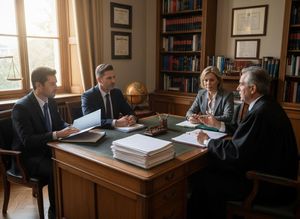
An arraignment is the first formal court appearance after criminal charges are filed. It is the stage where:
- Charges are formally read or acknowledged
- The defendant enters a plea (usually “not guilty”; this is not necessarily done in every case)
- Bail is addressed
- Protective orders may be issued
- Future court dates are set
What Is a Preliminary Hearing in California?
If you are charged with a felony in California, one of the major events in the case is the preliminary hearing (aka “The Prelim”). This hearing is not the trial. No jury decides guilt or innocence there. Instead, a live-testimony hearing is held and the judge decides whether the prosecution has shown enough evidence to keep the case moving forward and justify a jury trial.
A preliminary hearing can matter a great deal. It can expose weaknesses in the case, lock witnesses into testimony, narrow issues, support later motions, and sometimes result in charges being dismissed or reduced. It can also be a tactical trap if the defense gives away too much too early.
more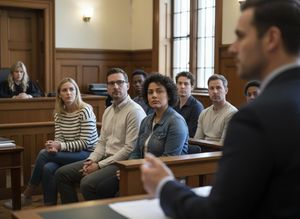
What Is a Jury Trial in California?
A jury trial is the stage of a criminal case where the prosecution must finally prove its case beyond a reasonable doubt to a group of citizens. It is the highest burden in the legal system—and the one that actually decides guilt or innocence.
Everything that comes before it—arrest, charging, arraignment, pretrial motions, and even the preliminary hearing—is about whether the case can proceed to this stage. The jury trial is where the case is won or lost.
If you are facing criminal charges in California, understanding how a jury trial actually works—and how it is different from everything leading up to it is critical.
more
California Gun & Firearm Laws: The Big Picture (and the Charges People Actually Get Filed With)
California treats firearm cases as high-stakes, high-leverage prosecutions. Even when there’s no allegation the gun was fired, prosecutors routinely file gun charges to (1) increase exposure, (2) trigger custody, and (3) force unfavorable plea pressure. The statutes are also technical—people get charged for paperwork, configuration, location, or status issues, not just “having a gun.”
This page lays out how California gun laws work at a practical level, what’s most commonly charged, and what those charges typically turn on.
(Note: The Supreme Court of the United States has recently submitted new opinions on the validity of certain gun laws; at least two of those opinions affect California laws and are being evaluated and are currently being reviewed under appeal)
more

HIPAA Waivers: What They Are and Why Your Attorney May Need One
If you’re involved in a criminal case and I ask you to sign a HIPAA waiver, that request is not routine paperwork. It serves a specific legal purpose, and it should be handled deliberately.
more