
What Is an SR-22 in California DUI Cases?

An SR-22 is not an insurance policy. It is a certificate of financial responsibility filed with the California Department of Motor Vehicles (DMV) by an insurance company confirming that you carry the minimum liability insurance required by law.

In every DUI case in California the DMV will require a driver to submit an SR-22 before they will reinstate or issue any form of driving privilege after a suspension.

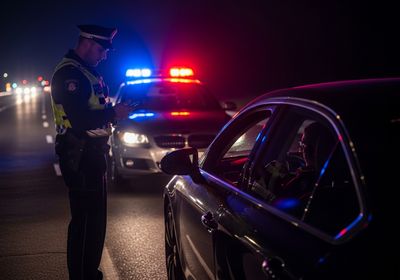
When Is an SR-22 Required?

An SR-22 is commonly required if you:

  • Are convicted of a DUI (Vehicle Code §23152)
  • Plead to a wet reckless (Vehicle Code §23103.5)
  • Have a DUI-related DMV suspension
  • Apply for a restricted license after a DUI
  • Have multiple at-fault accidents or serious traffic violations

In DUI cases, the SR-22 requirement comes from the DMV, not the court—though the two often operate in parallel.

How Long Is an SR-22 Required in California?

In most DUI-related cases, the SR-22 must be maintained for three years from the date driving privileges are reinstated.

Key point:

  • The clock runs only while the SR-22 is continuously maintained
  • Any lapse or cancellation can restart the requirement and trigger another suspension

How SR-22s Interact With DUI Criminal Cases

The Criminal Court and the DMV Case Are Completely Separate Systems

  • The Court handles the criminal DUI case (probation, fines, jail, DUI program)
  • The DMV only pertains to your driver’s license status

You can win or resolve your criminal case and still be suspended by the DMV. The DMV doesn’t know or care whether a criminal case is dismissed or not–they operate their own procedure which has its own distinct rules of evidence and due process rights.

SR-22 and Restricted Licenses

If the DMV elects to suspend the license (as they do in the vast majority of DUI arrests), you may apply to get a restricted license after a DUI suspension, the DMV will require:

  • Proof of DUI program enrollment
  • Proof of insurance via an SR-22
  • Payment of reinstatement fees
  • (Sometimes) Installation of an ignition interlock device (IID)

Without an SR-22 on file, no restricted license will be issued, regardless of what happens in court.

Does an SR-22 Increase Insurance Costs?

Yes—but not because the SR-22 itself is expensive.

  • Filing an SR-22 is usually inexpensive (often $25–$50)
  • The real cost increase comes from being classified as a high-risk driver
  • Expect higher premiums during the SR-22 period

Some people without a car can obtain a non-owner SR-22 policy, which satisfies DMV requirements without insuring a specific vehicle.

What Happens If an SR-22 Lapses?

If your SR-22:

  • Is canceled
  • Expires
  • Is not renewed on time

The insurance company must notify the DMV, and the DMV can:

  • Immediately re-suspend your license
  • Require a new SR-22 filing
  • Extend the SR-22 obligation

This is one of the most common ways people unintentionally violate DUI-related requirements.

Next Steps

If you’re facing a DUI case and need to know more about your options and plan of action—you can contact me by sending a request to review the case here:

Secure online intake form

Featured Content

Photo of car keys and a shot of whiskey. DUI Offenses in California

A California DUI is typically two cases running at the same time:

  1. The criminal court case (prosecution, plea, trial, probation, fines, jail, classes), and
  2. The DMV administrative case (your license—suspension, restricted license, reinstatement).

They overlap, but they are not the same case, they use different rules, and you can “win” one and still lose the other. The DMV arena operates completely independently of the Criminal Justice system; the DMV does not have the same rules of evidence, due process guarantees, or timelines as the criminal case and needs to be addressed completely separately. Your attorney should be handling both cases.

Secure online intake form

more
Law office of Brendan Barrett | Officer pulling someone over

A DUI Offender Program is a state-mandated alcohol education and counseling program required in most California DUI and reckless driving cases. These programs are licensed by the California Department of Health Care Services (DHCS) and must be completed through an approved provider. (Be very careful signing up for these–there are plenty of knock-off courses that will take your money and then not be accepted by the DMV/Court).

If you are convicted of a DUI or wet+reckless—completion of the appropriate DUI program is not optional. It is required by law and enforced by both the court and the DMV in every single case.

more
The Lifecycle of a Criminal Case | Law Office of Brendan Barrett

Criminal Defense Overview

A California criminal case does not move in one straight line. Cases begin with an investigation or arrest, but many never reach trial. Some are rejected before filing. Some resolve at arraignment. Some felony cases are narrowed or dismissed at the preliminary hearing. Others proceed all the way through jury trial.

Still, there is a classic path. If you understand that path, it becomes much easier to understand what is happening in your own case and why timing, charging decisions, and defense strategy matter so much for the fate of a case.

This page is my attempt to illustrate the usual lifecycle of a California criminal case from arrest through jury trial and to highlight the major differences between misdemeanor and felony procedure.

Secure online intake form

more