California Gun & Firearm Laws: The Big Picture (and the Charges People Actually Get Filed With)

California treats firearm cases as high-stakes, high-leverage prosecutions. Even when there’s no allegation the gun was fired, prosecutors routinely file gun charges to (1) increase exposure, (2) trigger custody, and (3) force unfavorable plea pressure. The statutes are also technical—people get charged for paperwork, configuration, location, or status issues, not just “having a gun.”

This page lays out how California gun laws work at a practical level, what’s most commonly charged, and what those charges typically turn on.

(Note: The Supreme Court of the United States has recently submitted new opinions on the validity of certain gun laws; at least two of those opinions affect California laws and are being evaluated and are currently being reviewed under appeal)
The Two Questions That Drive Most Gun Cases

1) What conduct is alleged?

Examples: concealed carry, loaded carry, prohibited type of possession, unserialized firearm, assault weapon, ghost gun, prohibited location, negligent discharge, etc.

2) Who is alleged to possess it—and how?

In practice, many gun cases rise or fall on:

  • Possession (actual vs constructive; “in the trunk” vs “on the person”)
  • Knowledge (did the person know it was there / know what it was)
  • Control (shared vehicle/home; multiple occupants; ownership isn’t the same as possession)
  • Legality (is this person lawfully allowed or licensed to have a firearm)

The Most Commonly Charged California Firearm Statutes

Below are the Penal Code sections that show up constantly in real cases (traffic stops, searches, probation/parole contacts, domestic calls, gang allegations, and “found in a vehicle/home” scenarios).

Carrying / Transportation Charges

PC 25400 — Carrying a concealed firearm

Common fact pattern: gun in waistband, under seat, in center console, in a bag within reach, or “hidden” in a vehicle.

PC 25850 — Carrying a loaded firearm in public / in a vehicle in public

Common fact pattern: loaded firearm on person or in vehicle while in a public place or on a public street.

PC 626.9 — Gun-Free School Zone Act

Enhances risk dramatically if the allegation is possession within a school zone, even if the underlying conduct is otherwise “just possession.”

PC 26100 — “Drive-by shooting” / discharge from a vehicle

Serious filing—often paired with gang/strike theories when applicable.

PC 246.3 — Negligent discharge of a firearm

Often filed when there’s a discharge but the DA can’t prove intent required for other discharge crimes. (The Plaxico or Cheddar-Bob cases)

Prohibited Person (Status-Based) Possession Charges

PC 29800 — Felon in possession of a firearm

This is a staple felony filing. “Possession” can be litigated–especially with shared spaces/vehicles.

Related “prohibited person” concepts often implicated in practice:

  • Prior felony / certain misdemeanor prohibitions (battery, domestic violence)
  • Protective orders
  • Probation/parole terms
  • Mental-health based prohibitions (case-specific, record-driven)

“Ghost Gun” / Serialization / Altered Serial Number Charges

PC 29180 — Self-manufactured or self-assembled firearms; serialization requirements / prohibitions

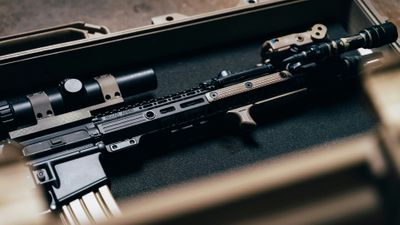
This is the backbone statute behind many “ghost gun” prosecutions and parts-based cases.

Possession of a firearm with an obliterated/altered serial number (commonly charged)

These cases often turn on whether the defendant knew the serial number was altered and whether the firearm qualifies under the specific statutory definition.

Assault Weapon / Magazine / Configuration-Driven Charges

Assault Weapons Control Act (AWCA)

California’s assault-weapon restrictions remain enforceable, and the DOJ has publicly stated the ban remains in effect while litigation proceeds.

Large-capacity magazine (>10 rounds) restrictions

As of this year, California’s restrictions have been upheld by the Ninth Circuit (prosecution has continued while the case postures play out).

The practical point: configuration cases are technical. They can involve:

  • Firearm type/classification
  • Features/configuration
  • Magazine capacity
  • “What exactly is it?” questions (often expert-driven)

Concealed Carry Permits and “Sensitive Places” (SB 2 Reality)

Even people with CCW permits can be exposed if they carry in prohibited locations. California’s post-Bruen “sensitive places” rules have been actively litigated; the California DOJ issued guidance about what locations were covered.

If a case involves a CCW holder, the issue is often not “permit/no permit”—it’s where, how, and what restrictions applied on that date.

How These Cases Are Typically Proven (and How They’re Defended)

What the DA usually leans on

  • “Possession” inference from proximity (car/house cases)
  • Statements (“it’s mine,” “I forgot it was there,” etc.)
  • Search/legal justification (stop, detention, probation search, warrant)
  • Registration records (which are not the same as possession)
  • Photos, texts, social media (especially in enhancement cases)

Common defense pressure points

  • Illegal stop/search (suppression issues)
  • Constructive possession (shared access, multiple occupants)
  • Knowledge (did the person know it was present/loaded/altered)
  • Classification disputes (what the object legally is)
  • Chain of custody / lab issues (especially with discharge or parts cases)
  • Enhancement overreach (when gun charges are used to inflate leverage)

Collateral Consequences People Don’t See Coming

Even without a prison sentence, firearm cases can trigger:

  • Lifetime or long-term firearm prohibitions
  • Immigration consequences (case-specific, but real and concerning)
  • Probation terms that function like a long-tail punishment
  • Professional licensing issues
  • Search conditions

Next Step

If you or a family member is facing a gun or firearm charge in California—and you want a defense review focused on the specific statute(s) filed, the search issues, and the exposure—you can send your information to me here:

Secure online intake form

Featured Content

Gun Violence Restraining Orders | Law Office of Brendan Barrett

A Gun Violence Restraining Order (GVRO) is a civil court order that temporarily prohibits a person from owning, possessing, purchasing, receiving, or attempting to purchase firearms and ammunition.

Although GVROs are civil orders, they frequently arise out of criminal investigations or pending criminal cases, and violations of a GVRO order carry serious felony exposure.

California’s GVRO laws have expanded significantly in recent years, including recent legislative changes signed by the Governor which makes them more common, easier for the County to pursue, and more dangerous for gun-owners than before.

more
1775620147829/sample_0.jpg

The difference between a felony and a misdemeanor is not just about jail time. It affects:

  • Where the case is filed
  • How the case is prosecuted
  • Custody exposure
  • Long-term consequences
  • Record impact
  • Strike implications
  • Immigration consequences

The classification of an offense determines how serious the court treats the case.

more
The Lifecycle of a Criminal Case | Law Office of Brendan Barrett

Criminal Defense Overview

A California criminal case does not move in one straight line. Cases begin with an investigation or arrest, but many never reach trial. Some are rejected before filing. Some resolve at arraignment. Some felony cases are narrowed or dismissed at the preliminary hearing. Others proceed all the way through jury trial.

Still, there is a classic path. If you understand that path, it becomes much easier to understand what is happening in your own case and why timing, charging decisions, and defense strategy matter so much for the fate of a case.

This page is my attempt to illustrate the usual lifecycle of a California criminal case from arrest through jury trial and to highlight the major differences between misdemeanor and felony procedure.

more
What Is an Arraignment in California? | Law Office of Brendan Barrett

An arraignment is the first formal court appearance after criminal charges are filed. It is the stage where:

  • Charges are formally read or acknowledged
  • The defendant enters a plea (usually “not guilty”; this is not necessarily done in every case)
  • Bail is addressed
  • Protective orders may be issued
  • Future court dates are set
more
Preliminary Hearing in California | Law Office of Brendan Barrett

A preliminary hearing (often called a “prelim”) is a court proceeding in felony cases where a judge determines whether there is enough evidence to require the defendant to stand trial.

It is not a trial. It is a screening mechanism to weed out baseless charges or narrow the scope of a future jury trial.

more
What Is a Jury Trial in California? | Law Office of Brendan Barrett

A jury trial is the stage of a criminal case where the prosecution must finally prove its case beyond a reasonable doubt to a group of citizens. It is the highest burden in the legal system—and the one that actually decides guilt or innocence.

Everything that comes before it—arrest, charging, arraignment, pretrial motions, and even the preliminary hearing—is about whether the case can proceed to this stage. The jury trial is where the case is won or lost.

If you are facing criminal charges in California, understanding how a jury trial actually works—and how it is different from everything leading up to it is critical.

more